India’s Premium Compliance Stack
 India’s Premium Compliance Stack
Income Tax Return Filing
ITR filing means reporting your taxable income, deductions, tax liability, and taxes already paid to the Income Tax Department. Which form you file depends on your legal structure, not just your turnover, an individual with business income, a proprietorship, a partnership firm, an LLP, and a company all use different forms.
BookmyCA reviews your actual circumstances, picks the correct form, computes your tax position, and handles filing and verification.
Income Tax Return Filing at a Glance
ITR filing for businesses and entities covers individuals with business or professional income, proprietorships, partnership firms, LLPs, and companies, each with income-tax obligations distinct from personal salary filing. A proprietorship isn't a separate taxpayer from its owner and files through the individual's return, while firms, LLPs, and companies each file their own separate return. The correct form and computation depend on your actual structure and income sources, not your turnover alone.

Who Needs ITR Filing?
Consider it when:
- You're a business owner or proprietor reporting business income through your individual return
- You're a professional or freelancer, consultant, doctor, lawyer, architect, designer, or other independent practitioner
- You run a partnership firm or LLP with separate filing obligations from its partners
- You run a company with separate filing obligations from its shareholders and directors
It may not suit you when:
- You only have salary income with no business or professional income
- Your income sources are simple enough for a standard personal ITR-1/ITR-2 filing
- You have no turnover, capital gains, or presumptive-taxation considerations to evaluate
- Your entity already has this filing fully handled by an existing in-house tax team

Which ITR form applies based on your legal structure, residency, income sources, capital gains and filing history?
Check Which ITR Form AppliesChoosing the Right ITR Form
ITR-1, Salaried & Other Income.
For eligible resident individuals with salary, pension, one house property, and specified other income, subject to applicable conditions.
ITR-2, Capital Gains & Other Income.
For individuals and HUFs with income such as capital gains or multiple house properties who are not eligible for ITR-1.
ITR-3, Business & Professional Income.
For individuals and HUFs with business or professional income not eligible for ITR-1, ITR-2, or ITR-4.
ITR-4, Presumptive Income.
For eligible individuals, HUFs, and firms using presumptive taxation, subject to applicable conditions and income limits.
ITR-5, Firms & LLPs.
For partnership firms, LLPs, AOPs, BOIs, and certain other specified persons.
ITR-6, Companies
For companies other than those claiming exemption under Section 11, subject to applicable provisions.
Documents Required

Individuals, Professionals & Proprietorships
PAN, Aadhaar and bank statements
Form 16/16A, AIS and Form 26AS
Business records - sales/purchase, expense ledger, bank reconciliation
GST/TDS records - where applicable

Partnership Firms & LLPs
PAN
Partnership Deed / LLP Agreement
P&L and balance sheet
Partner details and remuneration

Companies
PAN
Financial statements and tax computation
TDS/TCS records
Shareholding information - and tax-audit report, where applicable
ITR Filing Process
Taxpayer & filing-status review
Legal structure, residential status, and applicable filing requirements identified
Document collection
Financial statements, tax statements, and supporting documents gathered
Income reconciliation
Business, professional, and other income reconciled with records
AIS, 26AS & TDS/TCS review
Departmental information reconciled against your records
Estimated Timeline
D0-D3
Taxpayer review & document collection
D2-D5
Income, AIS & 26AS reconciliation
D5-D7
Expense review & tax computation
D7-D8
Form selection & return preparation
D8-D10
Professional review, e-filing & verification
D9-D10
Final handover - After E-Verification
Benefits of Professional ITR Filing

Correct form selection
Wrong form choice can make an otherwise accurate return defective
Reconciled tax credits
Only as reliable as how carefully AIS, 26AS, and TDS/TCS are actually cross-checked
Accurate tax computation
Depends on complete underlying records, missing income sources still create liability
Reduced risk of notices
Reduces risk, doesn't eliminate it if departmental data itself has gaps
Pre Submission Checklist
Confirm Tax-Audit Applicability
Check turnover, gross-receipts, and cash-transaction thresholds against tax-audit conditions
Confirm Tax-Audit Applicability
Check turnover, gross-receipts, and cash-transaction thresholds against tax-audit conditions
Track the Correct Assessment Year
Confirm FY 2025-26 income is reported under AY 2026-27, distinct from the newer Tax Year framework
Track the Correct Assessment Year
Confirm FY 2025-26 income is reported under AY 2026-27, distinct from the newer Tax Year framework
Know Your Filing Deadline
Track the applicable due date, including the belated-return deadline (31 December 2026 for AY 2026-27)
Know Your Filing Deadline
Track the applicable due date, including the belated-return deadline (31 December 2026 for AY 2026-27)
Reconcile AIS & Form 26AS
Cross-check departmental data against your own books before filing
Reconcile AIS & Form 26AS
Cross-check departmental data against your own books before filing
Verify the Return After Filing
An unverified return isn't a completed filing, verify within the prescribed window
Verify the Return After Filing
An unverified return isn't a completed filing, verify within the prescribed window
Maintain Filing Records
Keep acknowledgement and computation records for future reference
Maintain Filing Records
Keep acknowledgement and computation records for future reference
Common ITR Filing Mistakes
Choosing the wrong ITR form.
Can make an otherwise accurate return defective
Not reconciling AIS, Form 26AS & TDS/TCS.
Unreconciled tax records can lead to mismatches, incorrect credits, or follow-up notices
Missing income from multiple sources.
Multiple bank accounts, clients, or platforms are easy to under-report without a full review
Reporting turnover without reviewing expenses.
Claimed expenses need supporting records, not just a round number
Incorrect capital-gain reporting.
Shares, securities, and property transactions often need specific computation and disclosure
Missing tax-audit or verification requirements.
Ignoring applicable audit requirements or failing to verify the return can leave the filing incomplete
ITR Form by Taxpayer Type
Common ITR Form (AY 2026-27)
ITR-3
Why Choose BookmyCA?
Transparent pricing
Full cost breakup before you commit. No surprises at the payment screen.
Right professional
CA, CS, or lawyer matched to your situation, not a one-size advisory.

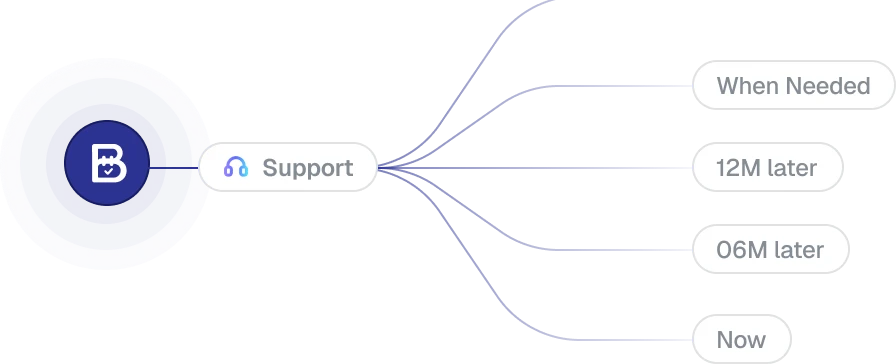
Long-term support
Available after incorporation for accounting, tax, and ROC compliance.
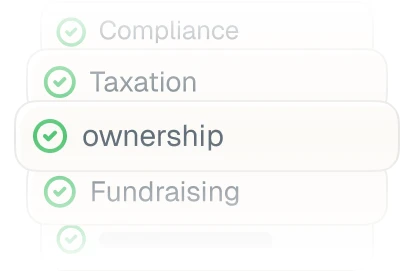
Informed decisions
Decisions that affect ownership, taxation, fundraising, and compliance, done right from the start.
Frequently Asked Questions
Individuals and HUFs with business or professional income generally use ITR-3 when not eligible for ITR-4. Eligible taxpayers under presumptive-tax conditions may use ITR-4.

No, a proprietorship isn't a separate taxpayer from its owner. Business income is reported through the proprietor's individual return, generally ITR-3 or ITR-4 depending on eligibility.
Generally ITR-5. An eligible resident firm (other than an LLP) may use ITR-4 if prescribed conditions are met.
ITR-5, filed at the LLP level, separate from the partners' individual returns.
Generally ITR-6, subject to applicable provisions.
Financial records, bank statements, AIS, Form 26AS, TDS/TCS information, previous ITR, expense records, and documents supporting applicable deductions.
Yes, we review filing history, applicable return requirements, and outstanding compliance issues first to determine the right approach.

Speak to a Tax Professional Before You File
Business and entity-level tax filing isn't just entering income figures into a form. The correct ITR form, income classification, tax computation, and disclosures all need review before you file.