India’s Premium Compliance Stack
 India’s Premium Compliance Stack
Monthly Bookkeeping Services
Monthly bookkeeping keeps your financial records accurate through regular transaction recording, reconciliation, and reporting. Bookkeeping is recording and classifying transactions, accounting adds reconciliation, adjustments, and financial reporting on top of that.
Regular bookkeeping keeps your accounts current and supports GST, tax, and audit requirements when they come up, instead of scrambling to reconstruct a year of records at once.
BookmyCA connects you with a bookkeeping and accounting team that handles this recurring work, so you're not managing it entirely in-house.
Monthly Bookkeeping & Accounting at a Glance
Monthly bookkeeping and accounting means recording your transactions, reconciling accounts, and preparing financial reports every month rather than periodically. Bookkeeping covers recording and classifying income, expenses, receivables, and payables. Accounting builds on that with reconciliation, month-end adjustments, and financial statements like the profit and loss report and balance sheet.
1
Centralized Books of Accounts
3+
Financial Reports
5+
Business types supported

Is Monthly Bookkeeping Right for You?
Consider it when:
- You're a startup or small business without a dedicated accounting team
- You're a private limited company or LLP needing organised records for compliance and reporting
- You're a trading or e-commerce business with frequent sales and purchase transactions
- You're a professional service business tracking revenue, expenses, and profitability
- You want to reduce recurring internal bookkeeping work
It may not suit you when:
- Your transaction volume is very low
- Your business has not yet started operations
- You only need bookkeeping once a year, at filing time
- You have no near-term compliance, investor, or reporting need for current financials

Bookkeeping matters most as transactions grow or current financials guide decisions. Not sure monthly makes sense?
Talk to usWhat You Need Before We Start
Sales and purchase records.
Customer and supplier transactions, recorded accurately as they happen.
Expense records and supporting documents.
Invoices, bills, and receipts backing every recorded transaction.
Bank statements and transaction records.
For accurate reconciliation and discrepancy detection.
Customer and supplier records.
To track receivables, payables, and outstanding balances.
Payroll and accounting records.
Employee-related transactions and existing ledger information, where applicable.
Opening balances and prior-period records.
For continuity between accounting periods.
Documents Required

Sales & Purchases
Sales invoices and receipts
Credit and debit notes
Purchase invoices and supplier bills
Expense receipts

Banking & Reconciliation
Bank statements
Payment and receipt records
Customer balances - invoices and outstanding amounts
Supplier balances - invoices and outstanding amounts

Payroll & Accounting Records
Salary sheets - and payroll summaries, where applicable
Trial balance
General ledger
Previous-period closing balances
Monthly Bookkeeping & Accounting Process
Collect financial records
Sales, purchase, expense, banking, and payroll records gathered for the month
Record transactions
Income, purchases, expenses, and journal entries recorded and classified
Verify invoices and expenses
Documents reviewed for completeness and correct classification
Reconcile bank accounts
Bank statements compared against accounting records
Benefits of Monthly Bookkeeping

Accurate financial records
Only as accurate as the source documents you provide each month
Better financial visibility
Useful for decisions only if you actually review the reports, not just receive them
Improved cash-flow management
Requires timely collection of your bank and transaction data, delays reduce the benefit
Easier tax, GST, and audit compliance
Well-maintained books support compliance, they don't replace separate filing and review requirements
Post-Accounting Checklist
Verify Sales & Purchase Records
Verify all sales and purchase transactions are recorded
Verify Sales & Purchase Records
Verify all sales and purchase transactions are recorded
Reconcile Bank Accounts
Reconcile bank accounts against accounting records
Reconcile Bank Accounts
Reconcile bank accounts against accounting records
Review Receivables & Payables
Review customer and supplier balances for outstanding items
Review Receivables & Payables
Review customer and supplier balances for outstanding items
Reconcile Key Ledgers
Reconcile key ledgers and investigate unusual balances
Reconcile Key Ledgers
Reconcile key ledgers and investigate unusual balances
Verify Expense Classification
Verify expense classification and supporting documents
Verify Expense Classification
Verify expense classification and supporting documents
Review GST Accounting Info
Review applicable GST accounting information
Review GST Accounting Info
Review applicable GST accounting information
Complete Month-End Adjustments
Complete month-end adjustments and review the trial balance
Complete Month-End Adjustments
Complete month-end adjustments and review the trial balance
Generate Monthly Reports
Generate monthly financial reports and organise supporting records
Generate Monthly Reports
Generate monthly financial reports and organise supporting records
Common Mistakes
Delaying transaction recording.
Late entries reduce how useful the financial information actually is, record as you go
Not reconciling bank and ledger accounts.
Unresolved differences compound the longer they're left
Missing, duplicate, or misclassified transactions.
Review supporting documents and apply consistent classification before finalising
Poor receivables and payables management.
Unreviewed balances lead to missed payments and inaccurate outstanding figures
Missing month-end adjustments.
Accruals, depreciation, and provisions need a structured review, not an afterthought
Relying on software without review.
Automated entries still need verification, unresolved balances carry forward otherwise
Bookkeeping vs Other Options
Transaction recording
Internal team
Accounting expertise
Depends on staff
Staffing requirement
Requires employees
Scalability
Depends on team capacity
Best suited for
Businesses with accounting teams already
Why Choose BookmyCA?
Transparent pricing
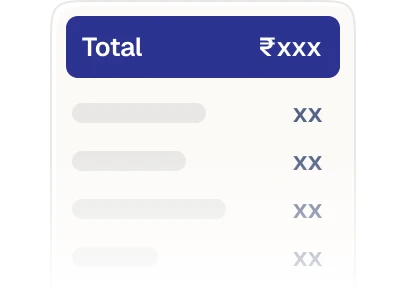
Full cost breakup before you commit. No surprises at the payment screen.
Right professional
CA, CS, or lawyer matched to your situation, not a one-size advisory.

Long-term support
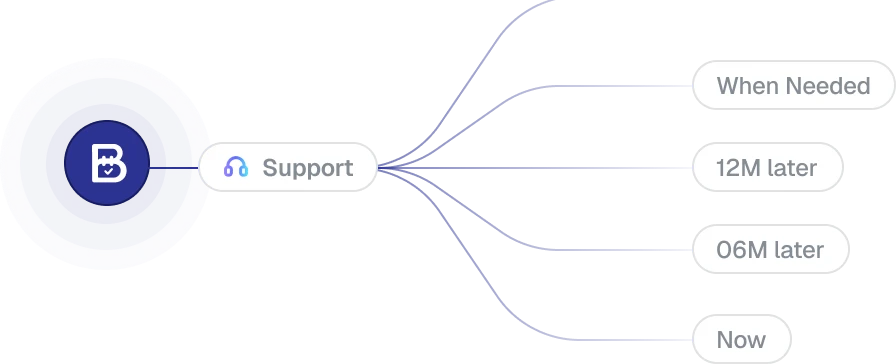
Available after incorporation for accounting, tax, and ROC compliance.
Informed decisions
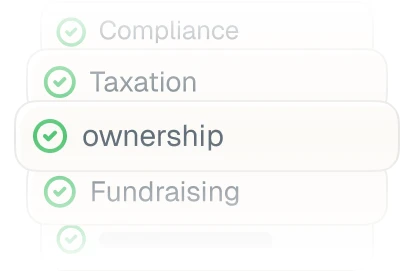
Decisions that affect ownership, taxation, fundraising, and compliance, done right from the start.
Frequently Asked Questions
Bookkeeping is recording and organising transactions. Accounting builds on that with reconciliation, adjustments, and financial reporting and analysis.

Sales and purchase invoices, expense bills, bank statements, receipts, payment records, payroll information, and previous accounting balances.
Regularly, ideally monthly. A structured monthly process catches discrepancies before they accumulate into a bigger cleanup later.
Yes, to reduce recurring internal accounting work while keeping records maintained by a professional team.
Yes, accurate books give you organised records that support GST, income-tax, audit, and other compliance processes when they come due.

Speak to a Professional for Monthly Bookkeeping & Accounting
Keep your books updated, accounts reconciled, and records organised every month. BookmyCA handles the recurring bookkeeping, reconciliation, and reporting work based on what your business actually needs.