India’s Premium Compliance Stack
 India’s Premium Compliance Stack
GST Registration in India
GST registration is the process of obtaining a Goods and Services Tax Identification Number (GSTIN), required once a business crosses the applicable turnover threshold or falls into a compulsory-registration category. Once registered, you can legally collect GST, issue GST-compliant invoices, and claim input tax credit.
The government charges no application fee for GST registration itself. BookmyCA connects you with a Chartered Accountant or tax professional who confirms whether you actually need to register now, and handles the application if you do.
GST Registration
at a Glance
GST registration is how an eligible business registers under the Goods and Services Tax framework and receives a GSTIN. It's required once turnover crosses the applicable threshold or the business falls into a compulsory-registration category, and it's optional otherwise, businesses can also register voluntarily. Once registered, GST compliance is ongoing: invoicing, returns, tax payment, and record-keeping continue as long as the registration is active.
3
Core GST Components
1
GSTIN
4+
Core GST Returns

Is GST Registration Required for Your Business?
Consider it when:
- Your turnover crosses the applicable threshold
- You fall into a category requiring compulsory registration, regardless of turnover
- You make specified interstate taxable supplies
- You're liable under specific GST law provisions for certain taxable activities
It may not suit you when:
- Your turnover stays below the applicable threshold
- You don't fall into a compulsory-registration category
- Your supplies and business circumstances don't otherwise trigger registration

Want ITC before crossing the threshold? Could voluntary GST registration help you?
Talk to usEligibility Criteria for GST Registration
Turnover threshold.
Varies by nature of supply and state, evaluate against current provisions, not a single flat number.
Compulsory-registration categories.
Some businesses must register regardless of turnover, depending on business type, supply type, and place of supply.
Business activity details.
Goods/services supplied, HSN/SAC classification, taxable vs exempt vs zero-rated supplies, interstate activity, e-commerce involvement.
Principal place of business.
Supported by ownership documents, lease agreement, or utility bill depending on the premises.
PAN and authorised signatory.
PAN of the applicant or entity, plus signatory details.
Aadhaar authentication.
May be required depending on the applicant and procedure, with additional verification if the application is flagged for review.
Documents Required

Individual Applicant
PAN
Aadhaar or other ID
Photograph
Bank details - where applicable

Business Entity
Entity PAN
Constitution proof - Partnership Deed, LLP Agreement, or Certificate of Incorporation
Partner/Director PAN and ID
Authorisation - for the signatory

Principal Place of Business
Ownership document
Lease agreement
Recent utility bill
NOC - from property owner, where applicable
GST Registration Process
Determine applicability
Turnover, supply type, state, and compulsory-registration provisions evaluated
Prepare applicant details
PAN, constitution, promoter/partner/director info, and place-of-business documents collected
Start the application
Registration application created on the GST Portal
Complete FORM GST REG-01
Taxpayer, business, signatory, and place-of-business details submitted
Estimated Timeline
D0-D2
Document collection and applicability review
D1-D3
Application preparation and REG-01 filing
D3-D5
Authentication & Verification
D5-D9
Officer review, if applicable
D8-D9
Final handover - After Approval
Benefits of GST Registration

Legal GST status and GSTIN
Comes with ongoing compliance, not a one-time exercise
Issue GST-compliant invoices
Requires correct GST disclosure on every invoice, not just any format
Input tax credit
Available subject to conditions, documentation, and supplier compliance
Improved B2B credibility
Doesn't guarantee business, some customers simply prefer registered suppliers
Post-Registration Checklist
Issue GST-Compliant Invoices
Issue invoices with all prescribed GST particulars
Issue GST-Compliant Invoices
Issue invoices with all prescribed GST particulars
File GST Returns on Time
File applicable GST returns within prescribed timelines
File GST Returns on Time
File applicable GST returns within prescribed timelines
Pay GST After ITC Adjustment
Pay GST after accounting for eligible input tax credit
Pay GST After ITC Adjustment
Pay GST after accounting for eligible input tax credit
Maintain GST Records
Maintain invoices, purchase records, sales records, and credit/debit notes
Maintain GST Records
Maintain invoices, purchase records, sales records, and credit/debit notes
Reconcile Input Tax Credit
Reconcile input tax credit against supplier data regularly
Reconcile Input Tax Credit
Reconcile input tax credit against supplier data regularly
Comply With E-Invoicing & E-Way Bill
Comply with e-invoicing and e-way bill requirements where applicable
Comply With E-Invoicing & E-Way Bill
Comply with e-invoicing and e-way bill requirements where applicable
Track Notices & Registration Updates
Monitor the GST Portal for notices and update registration details when your business information changes
Track Notices & Registration Updates
Monitor the GST Portal for notices and update registration details when your business information changes
Common Mistakes
Applying without checking applicability first.
Evaluate turnover, supply type, state, and compulsory-registration provisions before filing, not after
Using inconsistent business details.
PAN, legal name, address, or signatory info not matching supporting records causes avoidable delays
Providing inadequate address proof.
Prepare ownership, lease, or utility documents that actually establish your principal place of business
Misclassifying business activity or HSN/SAC.
Review your actual products and services against the correct classification before filing
Treating registration as the finish line.
Set up invoicing, returns, and record-keeping immediately, not after the first missed deadline
Assuming every GST payment becomes automatic input tax credit.
Track eligibility, documentation, and supplier compliance separately
GST Registration vs Other Schemes
GSTIN
Yes
Tax collection
Yes, subject to law
Input tax credit
Available, subject to conditions
Compliance
Regular GST compliance
Best suited for
Businesses needing full GST framework and ITC
Why Choose BookmyCA?
Transparent pricing
Full cost breakup before you commit. No surprises at the payment screen.
Right professional
CA, CS, or lawyer matched to your situation, not a one-size advisory.

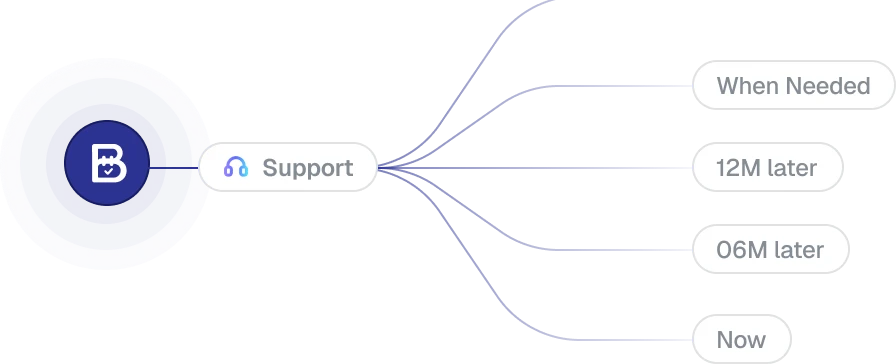
Long-term support
Available after incorporation for accounting, tax, and ROC compliance.
Informed decisions
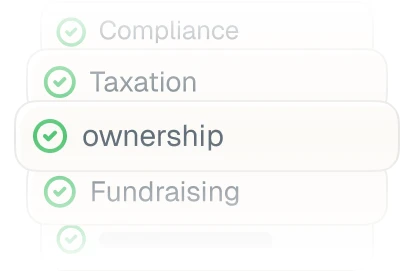
Decisions that affect ownership, taxation, fundraising, and compliance, done right from the start.
Frequently Asked Questions
Businesses crossing the applicable turnover threshold, or falling into a category requiring compulsory registration regardless of turnover. The requirement depends on supply type, state, and applicable provisions, not turnover alone.

Yes, entirely through the GST Portal using FORM GST REG-01. Common documents include PAN, identity and address proof, business constitution documents, and principal-place-of-business proof, with additional documents depending on your business structure.
Depends on application completeness, authentication, and whether officer review or clarification is required. Once approved, the GSTIN and certificate (Form GST REG-06) are issued electronically.
Yes, subject to applicable provisions. Voluntary registration brings the same ongoing compliance obligations as mandatory registration, invoicing, returns, and tax payment, so weigh the commercial benefit accordingly.
Ongoing GST return filing, tax payments, compliant invoicing, input tax credit reconciliation, record maintenance, and e-invoicing or e-way bill compliance where applicable. Registration is the start of the compliance lifecycle, not a one-time task.

Speak to a Professional Before You Register
GST registration should be based on your actual business activity, not turnover or a generic checklist alone. BookmyCA helps you assess applicability, prepare documentation, and set up compliance from day one.